Unveil The Enigmatic Colors Of Venus: Discoveries And Insights
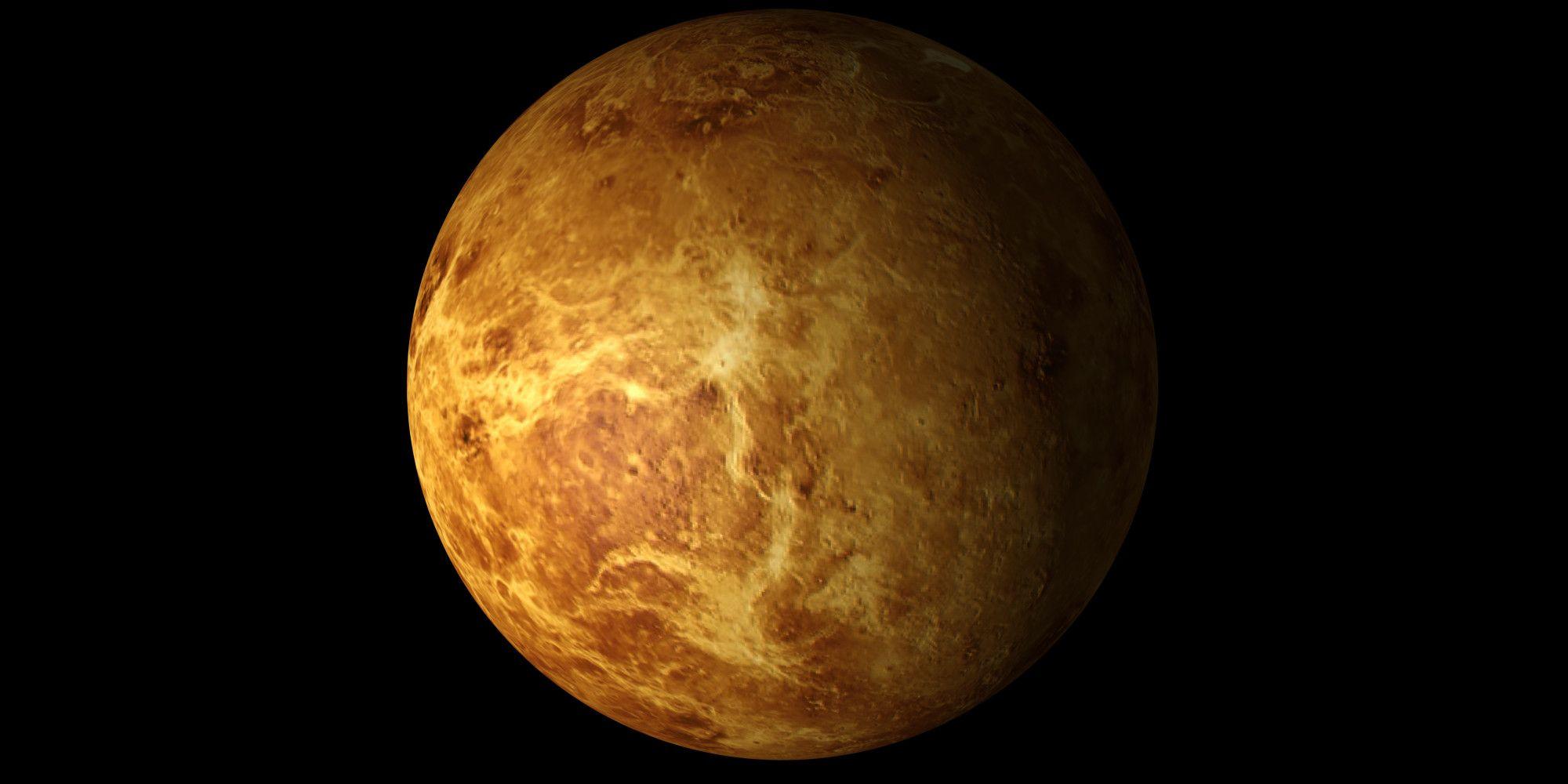
Venus, the second planet from the Sun, is often referred to as the "Evening Star" or the "Morning Star" because it is the brightest object in the night sky after the Moon. Venus is covered in a thick layer of clouds that reflect sunlight, giving it a brilliant white appearance. However, the planet's surface is actually a dull orange-yellow color due to the presence of sulfur dioxide in the atmosphere.
The thick atmosphere of Venus traps heat, causing a runaway greenhouse effect that makes the planet's surface extremely hot. The surface temperature of Venus is about 864 degrees Fahrenheit (462 degrees Celsius), which is hot enough to melt lead. The high temperatures and pressure on Venus make it impossible for liquid water to exist on the surface, and the planet is devoid of life as we know it.
Venus is a fascinating planet that has been studied extensively by scientists. The planet's unique atmosphere and surface conditions make it an important target for future exploration, as it could provide valuable insights into the evolution of Earth and other planets in our solar system.
What Color is Venus?
Venus, the second planet from the Sun, is often referred to as the "Evening Star" or the "Morning Star" because it is the brightest object in the night sky after the Moon. Venus is covered in a thick layer of clouds that reflect sunlight, giving it a brilliant white appearance. However, the planet's surface is actually a dull orange-yellow color due to the presence of sulfur dioxide in the atmosphere.
- Atmosphere: Thick and composed primarily of carbon dioxide, causing a runaway greenhouse effect.
- Clouds: Made up of sulfuric acid, reflecting sunlight and giving Venus its bright appearance.
- Surface: Rocky and covered in volcanic plains, with a dull orange-yellow color due to sulfur dioxide.
- Temperature: Extremely hot, with a surface temperature of about 864 degrees Fahrenheit (462 degrees Celsius).
- Pressure: Crushing, about 90 times that of Earth's atmosphere.
- Exploration: Difficult due to the planet's harsh conditions, but several probes have been sent to study it.
- History: Named after the Roman goddess of beauty and love, Venus has been known to humans since ancient times.
- Mythology: Associated with the goddess Aphrodite in Greek mythology and Ishtar in Babylonian mythology.
- Culture: Referenced in art, literature, and music throughout history.
Venus is a fascinating planet that has been studied extensively by scientists. The planet's unique atmosphere and surface conditions make it an important target for future exploration, as it could provide valuable insights into the evolution of Earth and other planets in our solar system.
Atmosphere
The thick atmosphere of Venus is composed primarily of carbon dioxide (96.5%), with trace amounts of nitrogen (3.5%) and other gases. This atmosphere is much thicker than Earth's, with a surface pressure about 90 times greater. The high concentration of carbon dioxide in the atmosphere causes a runaway greenhouse effect, which traps heat and makes the planet's surface extremely hot. The surface temperature of Venus is about 864 degrees Fahrenheit (462 degrees Celsius), which is hot enough to melt lead.
The thick atmosphere and runaway greenhouse effect also affect the color of Venus. The clouds that cover the planet are composed of sulfuric acid, which reflects sunlight and gives Venus its brilliant white appearance. However, the surface of the planet is actually a dull orange-yellow color due to the presence of sulfur dioxide in the atmosphere.
The runaway greenhouse effect on Venus is a fascinating phenomenon that has been studied extensively by scientists. It is an important example of how the atmosphere of a planet can affect its surface conditions and make it uninhabitable for life as we know it.
Clouds
The thick clouds that cover Venus are composed primarily of sulfuric acid. These clouds reflect sunlight, giving Venus its brilliant white appearance. However, the surface of the planet is actually a dull orange-yellow color due to the presence of sulfur dioxide in the atmosphere.
- Composition: The clouds of Venus are made up of sulfuric acid droplets, which are highly reflective and scatter sunlight in all directions.
- Reflection: The sulfuric acid clouds reflect about 75% of the sunlight that hits them, giving Venus its bright appearance.
- Coloration: The clouds give Venus its characteristic white color, which is why it is often referred to as the "Evening Star" or the "Morning Star."
- Contrast: The bright white clouds of Venus contrast with the dull orange-yellow color of the planet's surface, creating a striking visual effect.
The clouds of Venus are an important factor in the planet's appearance and climate. They reflect sunlight, keeping the planet's surface relatively cool, and they also trap heat, contributing to the planet's runaway greenhouse effect. The clouds of Venus are a fascinating and important part of the planet's atmosphere, and they play a major role in shaping its appearance and climate.
Surface
The surface of Venus is rocky and covered in volcanic plains. It has a dull orange-yellow color due to the presence of sulfur dioxide in the atmosphere. The sulfur dioxide gas absorbs blue light from the Sun, which gives Venus its characteristic color.
The surface of Venus is extremely hot, with a temperature of about 864 degrees Fahrenheit (462 degrees Celsius). This is because the thick atmosphere of Venus traps heat, causing a runaway greenhouse effect. The high temperature and pressure on the surface of Venus make it impossible for liquid water to exist, and the planet is devoid of life as we know it.
The surface of Venus is a fascinating and hostile environment. It is an important target for future exploration, as it could provide valuable insights into the evolution of Earth and other planets in our solar system.
Temperature
The extremely high surface temperature of Venus is directly related to its color. The planet's thick atmosphere, composed primarily of carbon dioxide, traps heat from the Sun, causing a runaway greenhouse effect. This intense heat causes the planet's surface to glow with a dull orange-yellow color.
- Greenhouse Effect: The high concentration of carbon dioxide in Venus' atmosphere acts as a blanket, trapping heat from the Sun and causing the planet's surface to become extremely hot.
- Thermal Radiation: The high surface temperature of Venus causes it to emit thermal radiation, which gives the planet its characteristic orange-yellow glow.
- Volcanic Activity: The intense heat on Venus has led to widespread volcanic activity, which has released large amounts of sulfur dioxide into the atmosphere. This sulfur dioxide absorbs blue light from the Sun, further contributing to the planet's orange-yellow color.
- Lack of Water: The extreme heat on Venus has prevented the formation of liquid water on the planet's surface. Water vapor is a powerful greenhouse gas, so its absence on Venus helps to explain the planet's high surface temperature.
The high surface temperature of Venus is a major factor in shaping the planet's appearance and environment. It is responsible for the planet's orange-yellow color, its lack of surface water, and its inhospitable conditions for life as we know it.
Pressure
The crushing pressure on Venus' surface is an important factor in determining its color. The high pressure compresses the gases in the atmosphere, making them more likely to absorb light. This absorption contributes to the planet's overall orange-yellow color.
- Light Absorption: The high pressure on Venus' surface causes the gases in the atmosphere to be compressed, which increases their density. This increased density makes the gases more likely to absorb light, particularly in the blue and violet wavelengths.
- Rayleigh Scattering: The high pressure on Venus' surface also affects the way light is scattered by the atmosphere. Rayleigh scattering is the scattering of light by particles that are much smaller than the wavelength of light. This type of scattering is what gives the sky its blue color on Earth. However, the high pressure on Venus causes the Rayleigh scattering to be more pronounced, which further contributes to the planet's orange-yellow color.
- Cloud Formation: The high pressure on Venus' surface also affects the formation of clouds. The high pressure makes it difficult for water vapor to condense into clouds. As a result, Venus has a very thin cloud cover, which allows more sunlight to reach the surface. This increased sunlight further contributes to the planet's high surface temperature and orange-yellow color.
The crushing pressure on Venus' surface is a major factor in shaping the planet's appearance and environment. It contributes to the planet's orange-yellow color, its lack of surface water, and its inhospitable conditions for life as we know it.
Exploration
Exploring Venus is difficult due to its harsh conditions. The planet's thick atmosphere, extreme heat, and crushing pressure make it impossible for humans to visit the surface. However, several probes have been sent to study Venus, providing valuable information about the planet's atmosphere, surface, and composition.
One of the most important discoveries made by these probes is the fact that Venus is covered in a thick layer of sulfuric acid clouds. These clouds reflect sunlight, giving Venus its bright white appearance. However, the surface of the planet is actually a dull orange-yellow color due to the presence of sulfur dioxide in the atmosphere.
The exploration of Venus has been essential to our understanding of the planet's color. By sending probes to study Venus, scientists have been able to learn more about the planet's atmosphere, surface, and composition. This information has helped us to better understand the evolution of Venus and its place in our solar system.
The exploration of Venus is an ongoing process. Scientists are currently planning new missions to the planet to learn more about its atmosphere, surface, and composition. These missions will help us to better understand the planet's color and its evolution.
History
The name "Venus" is derived from the Roman goddess of beauty and love, who was known for her radiant appearance. This association between Venus and beauty has influenced how we perceive the planet's color. The bright white appearance of Venus in the night sky, caused by the reflection of sunlight off its thick clouds, aligns with the of beauty and radiance associated with the goddess Venus.
Moreover, the planet's consistent visibility in the night sky has contributed to its cultural significance. Venus has been observed and studied by astronomers and scientists throughout history, leading to a deeper understanding of its physical characteristics, including its color. By studying Venus, we gain insights into the evolution and diversity of planets in our solar system.
In conclusion, the historical and cultural association of Venus with beauty and love has shaped our perception of the planet's color. The bright white appearance of Venus, reminiscent of the goddess Venus, reinforces the connection between the planet's name and its visual characteristics. Furthermore, the planet's historical significance and scientific value continue to drive our exploration and understanding of its color and other properties.
Mythology
The connection between the mythology surrounding Venus and its color is deeply rooted in cultural and historical contexts. In ancient civilizations, celestial bodies were often associated with deities and mythological figures, and Venus was no exception. The planet's remarkable brightness and consistent visibility in the night sky made it a captivating object of observation and reverence.
In Greek mythology, Venus was known as Aphrodite, the goddess of beauty, love, and fertility. Her association with beauty aligns with the planet's radiant appearance in the night sky. The bright white color of Venus, caused by the reflection of sunlight off its thick clouds, evokes a sense of purity, radiance, and allure, qualities often attributed to Aphrodite. Similarly, in Babylonian mythology, Venus was associated with the goddess Ishtar, who was also associated with beauty, fertility, and love.
The mythological associations with Venus have influenced how we perceive and interpret the planet's color. The bright white appearance of Venus, reminiscent of the radiance associated with goddesses of beauty and love, reinforces the connection between the planet's physical characteristics and its mythological significance. This connection has shaped cultural perceptions of Venus throughout history and continues to influence our understanding of the planet's color and its place in our solar system.
Culture
The cultural significance of Venus extends beyond its mythological associations and has found expression in various forms of art, literature, and music throughout history. The planet's distinctive color and visibility have captured the imagination of artists, writers, and musicians, influencing their creative works.
- Art:
Venus has been depicted in paintings, sculptures, and other art forms since ancient times. The planet's bright white appearance and association with beauty have made it a popular subject for artists. For example, the famous painting "The Birth of Venus" by Sandro Botticelli portrays the goddess Venus emerging from a giant scallop shell, her radiant white skin glowing against the blue waters. Similarly, the sculpture "Venus de Milo" depicts the goddess with a graceful and serene expression, her white marble form evoking a sense of purity and elegance.
- Literature:
Venus has also been a source of inspiration for writers throughout history. In William Shakespeare's play "Romeo and Juliet," the character of Juliet refers to Venus as the "fair sun" and the "brightest star," highlighting the planet's radiant appearance. Similarly, in John Milton's epic poem "Paradise Lost," Venus is described as "the queen of beauty" and is associated with the colors white and gold, reinforcing the planet's connection to radiance and beauty.
- Music:
The influence of Venus has also extended to the realm of music. In Gustav Holst's orchestral suite "The Planets," the movement dedicated to Venus is characterized by a gentle and flowing melody, evoking the planet's soft white light. Similarly, in the song "Venus" by the band Shocking Blue, the lyrics describe the planet as a "beautiful stranger" and a "mystic light," capturing its captivating and enigmatic qualities.
- Symbolism:
In addition to its direct depiction in art, literature, and music, Venus has also been used as a symbol throughout history. The planet's association with beauty and love has made it a popular symbol for romance and sensuality. For example, in the Victorian era, women often wore jewelry adorned with the symbol of Venus, representing their femininity and desirability. Similarly, the planet's bright white appearance has made it a symbol of hope and enlightenment, inspiring works of art and literature that explore themes of beauty, transcendence, and the search for knowledge.
By examining the cultural references to Venus in art, literature, and music, we gain a deeper appreciation for the planet's significance beyond its physical characteristics. The white color of Venus, its association with beauty and love, and its symbolic meanings have all contributed to the planet's enduring fascination and its enduring place in human culture.
FAQs on the Color of Venus
What gives Venus its distinctive color?
Venus's thick atmosphere, composed primarily of carbon dioxide and sulfuric acid, gives the planet its unique color. The sulfuric acid clouds reflect sunlight, giving Venus its bright white appearance. However, the surface of the planet is actually a dull orange-yellow color due to the presence of sulfur dioxide in the atmosphere.
Why does Venus appear brighter than other planets in the night sky?
Venus is the brightest planet in the night sky because its thick, highly reflective clouds reflect a large amount of sunlight back towards Earth. Its proximity to Earth and large size also contribute to its brightness.
Is the color of Venus visible to the naked eye?
Yes, the color of Venus is visible to the naked eye. While it appears bright white in the night sky, the orange-yellow color of the surface can be observed through telescopes or spacecraft.
What is the significance of Venus's color in scientific exploration?
The color of Venus provides valuable information about the planet's atmospheric composition and surface conditions. By studying the way light interacts with Venus's atmosphere and surface, scientists can gain insights into the planet's climate, geology, and potential for habitability.
How has the color of Venus influenced cultural and artistic representations?
Venus's distinctive color has played a significant role in cultural and artistic representations throughout history. Its bright white appearance has been associated with beauty, purity, and love, inspiring countless works of art, literature, and music.
What future missions are planned to study the color of Venus?
Several future missions are planned to study the color of Venus and its atmospheric composition. These missions aim to provide a more comprehensive understanding of the planet's surface, clouds, and the interaction of light with its unique environment.
In summary, the color of Venus is a result of its unique atmospheric composition and surface conditions. It has significant scientific and cultural importance, influencing our understanding of the planet and inspiring artistic expressions throughout history. Ongoing and future missions will continue to shed light on the enigmatic color of Venus and its implications for our understanding of the solar system.
Transition to the next article section...
Tips on Understanding the Color of Venus
Understanding the color of Venus requires a multifaceted approach that combines scientific knowledge, cultural context, and artistic appreciation.
Tip 1: Study the Atmospheric Composition
Venus's thick atmosphere, primarily composed of carbon dioxide and sulfuric acid, plays a crucial role in determining its color. Explore scientific literature and research to understand how these gases absorb and reflect sunlight, giving Venus its distinctive appearance.
Tip 2: Analyze Spectroscopic Data
Spectroscopic analysis provides valuable insights into the composition and properties of Venus's atmosphere. By studying the way light interacts with the planet's atmosphere, scientists can identify the presence of specific gases and determine their abundance.
Tip 3: Utilize Spacecraft Observations
Spacecraft missions to Venus, such as the Magellan and Venus Express missions, have provided detailed observations of the planet's surface and atmosphere. Analyze the data and imagery collected by these missions to gain a deeper understanding of Venus's color variations and surface composition.
Tip 4: Explore Cultural Depictions
Throughout history, Venus has been depicted in art, literature, and mythology. Examine how different cultures have interpreted and represented the planet's color, and consider the symbolism and meanings associated with it.
Tip 5: Appreciate the Artistic Inspirations
Venus's distinctive color has inspired countless works of art, from paintings and sculptures to music and poetry. Analyze how artists have used color, light, and symbolism to capture the essence of Venus and convey its beauty and mystery.
Conclusion
By following these tips, you can gain a comprehensive understanding of the color of Venus, its scientific basis, cultural significance, and artistic interpretations. This knowledge enriches our appreciation of the solar system and the diverse ways in which planets can captivate our imagination.
Conclusion
Our exploration of "what color venus planet" has revealed a fascinating interplay of science, culture, and artistic inspiration. Venus's unique color, a result of its dense atmosphere and sulfuric acid clouds, has captivated observers throughout history.
Scientific studies have provided detailed insights into the atmospheric composition and surface conditions of Venus, allowing us to understand the physical processes that shape its distinctive hue. Cultural representations of Venus have been equally diverse, with the planet's color often imbued with symbolic meanings and associated with beauty, love, and hope.
The color of Venus serves as a reminder of the interconnectedness of our solar system and the diversity of planetary environments. As we continue to explore and learn more about Venus and other celestial bodies, we deepen our understanding of the cosmos and our place within it.

Venus puts on variety show among its cloudtops Society

Astronomy; The Venus Facts and Photos HubPages
Venus Wallpapers Wallpaper Cave


