Unlock The Vibrant World Of Html Coloring: Discoveries And Insights Await
How to color on HTML refers to the process of adding color to web pages using HyperText Markup Language (HTML). It involves using the "style" attribute within HTML elements to specify color values. For example, to make text red, you would use the following code:
This text is red.
Coloring on HTML is essential for creating visually appealing and informative web pages. It can be used to highlight important information, create contrast, and evoke emotions. Additionally, color can be used to create a consistent brand identity across multiple web pages.
There are several ways to specify color values in HTML. The most common method is to use hexadecimal values, which are six-digit codes that represent the intensity of red, green, and blue (RGB) components. For example, the hexadecimal value for red is #FF0000.
Another method for specifying color values is to use RGB values, which are three-digit codes that represent the intensity of red, green, and blue components. For example, the RGB value for red is rgb(255, 0, 0).
Finally, you can also use color names to specify color values. HTML supports a limited number of color names, such as "red," "green," "blue," and "black."
How to Color on HTML
Color plays a crucial role in web design, influencing aesthetics, readability, and user experience. Adding color to HTML elements is essential for creating visually appealing and informative web pages.
- Syntax: Use the "style" attribute within HTML elements to specify color values.
- Methods: Specify color values using hexadecimal, RGB, or color names.
- Color Properties: Control various aspects of color, including hue, saturation, and lightness.
- Contrast: Ensure adequate contrast between text and background colors for accessibility.
- Color Schemes: Create harmonious color combinations using color theory.
- Semantic Coloring: Use color to convey meaning and enhance comprehension.
- Emotional Impact: Leverage color psychology to evoke specific emotions and responses.
- Accessibility: Consider colorblindness and other visual impairments when choosing colors.
- Tools: Utilize color pickers and online tools to select and preview colors.
These aspects collectively contribute to effective use of color on HTML. By understanding and applying these principles, web developers can create visually appealing, accessible, and engaging web pages that enhance user experience.
Syntax
The syntax presented in this context establishes the fundamental approach to adding color to HTML elements. It serves as the cornerstone of "how to color on HTML," providing the technical foundation for applying color attributes to various HTML elements.
- Attribute Specification: The "style" attribute acts as a container for CSS (Cascading Style Sheets) properties, allowing developers to specify color values and other styling attributes.
- CSS Property: Within the "style" attribute, the "color" property is responsible for defining the color of the targeted HTML element. It accepts various color values, such as hexadecimal, RGB, and color names.
- Element Targeting: The "style" attribute can be applied to any HTML element, enabling developers to color headings, paragraphs, links, and other content as needed.
- Specificity and Inheritance: The "style" attribute allows for inline styling, which takes precedence over inherited styles from parent elements. This specificity ensures precise control over the appearance of individual elements.
Understanding the syntax for specifying color values is essential for effectively applying color to HTML elements. It empowers web developers to create visually appealing and informative web pages that align with their design goals and enhance user experience.
Methods
In the context of "how to color on HTML," specifying color values using hexadecimal, RGB, or color names serves as the cornerstone for defining the visual appearance of HTML elements. These methods provide a range of options for web developers to precisely control the colors displayed on their web pages.
- Hexadecimal Values:
Hexadecimal values, represented by six-digit codes, offer a concise and versatile way to specify colors. Each pair of digits corresponds to the intensity of red, green, and blue components, providing a wide spectrum of color options. For instance, the hexadecimal value #FF0000 represents pure red.
- RGB Values:
RGB values, expressed as three-digit codes, also define colors based on the intensity of red, green, and blue components. However, unlike hexadecimal values, RGB values range from 0 to 255 for each component. For example, the RGB value rgb(255, 0, 0) represents pure red.
- Color Names:
Color names provide a convenient and intuitive method for specifying colors using predefined keywords. HTML supports a limited number of color names, such as "red," "green," "blue," and "black." While color names offer simplicity, they may not provide the same level of precision as hexadecimal or RGB values.
Understanding these methods empowers web developers to select and apply colors effectively, ensuring that their web pages align with their desired aesthetics and branding requirements.
Color Properties
In the context of "how to color on HTML," understanding and manipulating color properties is crucial for achieving precise and visually appealing results. Color properties empower web developers to control various aspects of color, including hue, saturation, and lightness, allowing them to create a diverse range of color effects.
- Hue:
Hue refers to the pure color, such as red, green, or blue. It is the most basic property of color and determines the overall perception of a color. By adjusting the hue, web developers can create different color variations while maintaining the same saturation and lightness.
- Saturation:
Saturation represents the intensity or purity of a color. A highly saturated color is vivid and vibrant, while a less saturated color appears more muted or grayish. Controlling saturation allows web developers to create subtle color variations and achieve specific visual effects.
- Lightness:
Lightness refers to the brightness or darkness of a color. A light color has a higher percentage of white, while a dark color has a higher percentage of black. Adjusting lightness can create contrast, depth, and visual hierarchy within web pages.
By understanding and manipulating these color properties, web developers can create harmonious color combinations, enhance readability and accessibility, and convey specific emotions or messages through the strategic use of color. Color properties serve as fundamental building blocks for effective color management in HTML, enabling the creation of visually appealing and engaging web experiences.
Contrast
In the context of "how to color on HTML," ensuring adequate contrast between text and background colors is of utmost importance for accessibility. It directly impacts the readability and user experience of web pages, especially for individuals with visual impairments or colorblindness.
- WCAG Guidelines:
The Web Content Accessibility Guidelines (WCAG) set specific contrast ratios to ensure text is easily distinguishable from its background. These guidelines help web developers create accessible and inclusive web pages.
- Visual Impact:
Adequate contrast improves visual clarity and reduces eye strain. When text and background colors have insufficient contrast, it becomes difficult to read and comprehend the content, affecting the overall user experience.
- Assistive Technology:
Screen readers and other assistive technologies rely on color contrast to distinguish text from the background. Insufficient contrast can hinder these technologies from accurately reading the content, limiting accessibility for users with disabilities.
- Legal Implications:
In some jurisdictions, ensuring adequate color contrast is a legal requirement for website accessibility. Failure to meet these requirements can result in legal consequences.
By understanding the importance of contrast and adhering to accessibility guidelines, web developers can create inclusive web pages that cater to the needs of all users, regardless of their visual abilities.
Color Schemes
In the realm of "how to color on HTML," understanding and applying color theory is essential for creating visually appealing and effective web pages. Color schemes play a pivotal role in establishing a coherent and visually pleasing aesthetic, enhancing the overall user experience.
Color theory provides a framework for combining colors harmoniously, considering their relationships and effects on human perception. By utilizing color wheels and understanding concepts such as complementary, analogous, and monochromatic color schemes, web developers can create color combinations that evoke specific emotions, convey messages, and guide the user's attention.
For instance, a website promoting a natural and organic brand might employ a monochromatic green color scheme to convey a sense of tranquility and growth. Conversely, a website for a tech company could utilize a complementary color scheme of blue and orange to create a dynamic and visually stimulating experience.
Moreover, color schemes can enhance the readability and usability of web pages. By ensuring adequate contrast between text and background colors, web developers can improve the accessibility of their content for users with visual impairments or colorblindness.
In conclusion, understanding color theory and creating harmonious color schemes is an integral part of "how to color on HTML." It empowers web developers to create visually appealing, accessible, and effective web pages that engage users and convey the desired message.
Semantic Coloring
In the context of "how to color on HTML," semantic coloring plays a crucial role in enhancing the user experience and conveying information effectively. It involves using color strategically to create meaningful associations and improve comprehension, particularly for complex or data-heavy content.
- Categorization and Differentiation:
Color can be used to categorize and differentiate different types of information, making it easier for users to scan and locate relevant content. For example, using different colors for headings, subheadings, and body text creates a visual hierarchy that guides the reader's eye.
- Highlighting Important Information:
Color can draw attention to important information or call-to-actions. By using contrasting colors for key elements, such as buttons, links, or error messages, web developers can guide the user's focus and improve the overall usability of the page.
- Data Visualization:
Color can be leveraged to represent data visually, making it easier to understand and interpret complex information. For example, using a color gradient to represent the range of values in a dataset helps users quickly identify patterns and trends.
- Emotional Connotation:
Color can also convey emotional connotations, influencing the user's perception and response. For instance, using green to indicate success or red to indicate errors can create a more intuitive and engaging user experience.
In conclusion, semantic coloring is a powerful technique that enhances the effectiveness of "how to color on HTML" by using color strategically to convey meaning, improve comprehension, and engage users more deeply with the content.
Emotional Impact
In the realm of "how to color on HTML," understanding color psychology and its emotional impact is crucial. Color has the power to evoke specific emotions and responses, influencing user behavior and creating a more engaging and effective web experience.
- Color and Mood:
Colors can create a specific mood or atmosphere on a web page. For instance, warm colors like red and orange can evoke feelings of excitement and energy, while cool colors like blue and green can promote a sense of calmness and tranquility.
- Color and Trust:
Certain colors can influence trust and credibility. Blue is often associated with reliability and security, making it a suitable choice for financial institutions and healthcare websites. Green, on the other hand, conveys a sense of growth and renewal, making it effective for environmental or health-related websites.
- Color and Action:
Colors can be used to encourage specific actions. For example, red is known to stimulate urgency and excitement, making it a good choice for call-to-action buttons. Green, on the other hand, is associated with growth and progress, making it suitable for progress bars or positive feedback messages.
- Cultural and Contextual Factors:
The emotional impact of colors can vary depending on cultural and contextual factors. For instance, the color white may represent purity in Western cultures but mourning in some Eastern cultures. It is important to consider the target audience and cultural context when choosing colors for a web page.
By understanding and leveraging color psychology, web developers can harness the power of color to create websites that evoke desired emotions, build trust, encourage action, and cater to the specific needs of their target audience.
Accessibility
In the context of "how to color on HTML," accessibility is of paramount importance. Colorblindness and other visual impairments affect a significant portion of the population, and it is crucial to consider these factors when choosing colors for web pages. Failing to do so can hinder the user experience and limit the accessibility of your content.
For instance, using red and green as the primary colors for a website can pose challenges for users with red-green colorblindness, making it difficult for them to distinguish between these colors. Similarly, using low-contrast color combinations can make it challenging for users with low vision to read the text.
To ensure accessibility, web developers should use color contrast checkers to verify that there is sufficient contrast between text and background colors. Additionally, avoiding the use of color alone to convey information is recommended, as users with colorblindness may not be able to perceive the intended meaning. Instead, consider using additional cues, such as shapes or textures, to enhance accessibility.
By incorporating accessibility considerations into the process of "how to color on HTML," web developers can create inclusive and user-friendly web pages that cater to the needs of all users, regardless of their visual abilities.
Tools
When embarking on "how to color on HTML," leveraging color pickers and online tools is essential for selecting and previewing colors effectively. These tools provide a range of capabilities that enhance the color selection process, streamline workflow, and ensure accurate color choices.
- Color Picker Tools:
Color picker tools allow web developers to select colors visually using interactive interfaces. They offer a wide spectrum of colors to choose from and provide various formats for color representation, such as hexadecimal, RGB, and HSL. Color pickers simplify the process of finding the precise color needed for a design.
- Color Palette Generators:
Color palette generators assist in creating harmonious color combinations. They generate color palettes based on a selected base color or theme. These tools help web developers explore different color combinations and ensure visual consistency throughout their designs.
- Contrast Checkers:
Contrast checkers analyze the contrast ratio between text and background colors. They help ensure that the chosen color combinations meet accessibility guidelines and are easily readable for users with visual impairments. Contrast checkers promote accessibility and inclusivity in web design.
- Online Color Libraries:
Online color libraries provide access to a vast collection of pre-defined color swatches. These libraries offer a convenient way to find and incorporate popular color combinations or industry-standard color schemes into web designs. They streamline the color selection process and promote consistency across multiple projects.
By utilizing color pickers and online tools, web developers can expedite the process of "how to color on HTML," make informed color choices, and ensure accessibility and visual appeal in their designs.
FAQs on How to Color on HTML
This section addresses frequently asked questions and misconceptions surrounding the topic of "how to color on HTML." It provides clear and concise answers to common queries, offering valuable insights for web developers seeking to enhance the visual appeal and accessibility of their web pages.
Question 1: What is the syntax for adding color to HTML elements?
Answer: To add color to HTML elements, use the "style" attribute within the element. The "color" property within the "style" attribute accepts color values specified in hexadecimal, RGB, or color names.
Question 2: What are the different methods to specify color values in HTML?
Answer: Color values in HTML can be specified using hexadecimal values (e.g., #FF0000), RGB values (e.g., rgb(255, 0, 0)), or color names (e.g., "red").
Question 3: How do I ensure adequate contrast between text and background colors?
Answer: To ensure accessibility, use a color contrast checker to verify sufficient contrast between text and background colors. Aim to meet the recommended contrast ratios set by accessibility guidelines, such as the Web Content Accessibility Guidelines (WCAG).
Question 4: What is the significance of using color schemes in HTML?
Answer: Color schemes help create visually appealing and harmonious web pages. By combining colors based on color theory principles, web developers can evoke specific emotions, convey messages, and guide the user's attention.
Question 5: How can I leverage color psychology when choosing colors for my web page?
Answer: Understanding color psychology enables web developers to select colors that elicit desired emotional responses and influence user behavior. For instance, warm colors like red can create excitement, while cool colors like blue can promote calmness.
Question 6: What tools can assist me in selecting and previewing colors for my HTML page?
Answer: Utilize color pickers, color palette generators, and online color libraries to streamline the color selection process. These tools offer visual interfaces, suggest harmonious color combinations, and ensure accessibility compliance.
In conclusion, understanding the nuances of "how to color on HTML" empowers web developers to create visually appealing, accessible, and effective web pages. By adhering to best practices, leveraging tools, and considering the impact of color on users, developers can enhance the overall user experience and achieve their design goals.
Transition to the next article section:
Tips for Coloring on HTML
Incorporating color into HTML can significantly enhance the visual appeal and usability of web pages. Here are several tips to help you effectively color on HTML:
Tip 1: Use Meaningful Colors
Choose colors that align with the purpose and content of your website. For instance, green can represent growth and sustainability, while blue conveys trust and security.
Tip 2: Consider Color Contrast
Ensure adequate contrast between text and background colors to enhance readability and accessibility. Use a color contrast checker to verify that your color choices meet accessibility guidelines.
Tip 3: Utilize Color Schemes
Create harmonious color combinations using color schemes. Color theory principles can guide your choices to evoke specific emotions and convey messages.
Tip 4: Leverage Color Psychology
Understand the psychological impact of colors and use them strategically. For example, warm colors can stimulate excitement, while cool colors promote calmness.
Tip 5: Use Color Pickers and Tools
Utilize color pickers and online tools to select and preview colors. These tools offer a range of features to assist you in finding the perfect color combinations and ensuring accessibility.
By following these tips, you can effectively use color on HTML to enhance the visual appeal, accessibility, and overall user experience of your web pages.
Transition to the conclusion:
Conclusion on How to Color on HTML
In summary, "how to color on HTML" involves understanding and applying various techniques to enhance the visual appeal, accessibility, and effectiveness of web pages. By utilizing color properties, creating harmonious color schemes, and considering color psychology, web developers can create engaging and user-friendly experiences.
Color plays a crucial role in conveying emotions, guiding user attention, and supporting the overall design aesthetic. By adhering to best practices and leveraging available tools, web developers can harness the power of color to create websites that are both visually stunning and meaningful.

HTML Colours Color palette challenge, Color chart, Color coding

4 formas de establecer el color de fondo en HTML
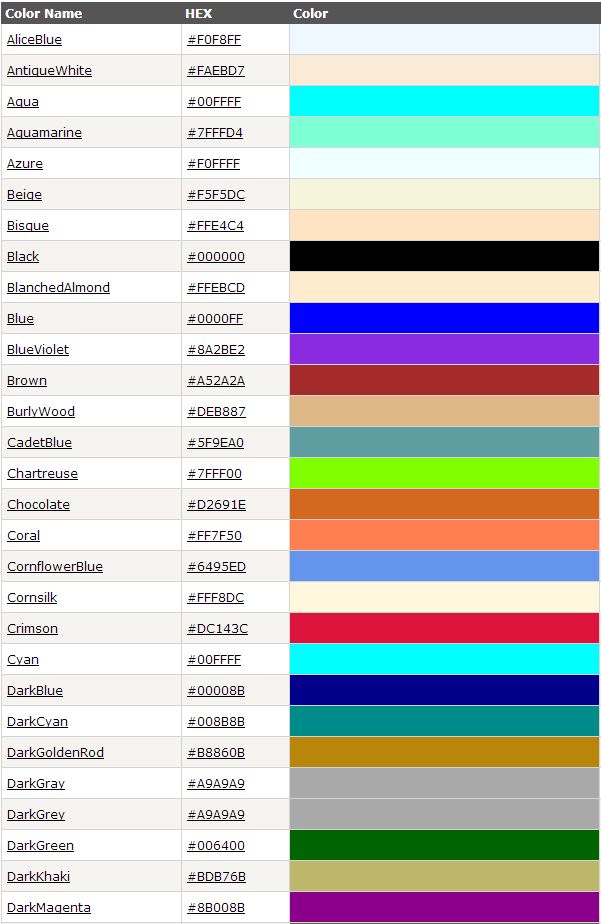
Color Name in HTML5


