Unlock The Secrets Of Css Colors: A Journey Of Discovery And Insight
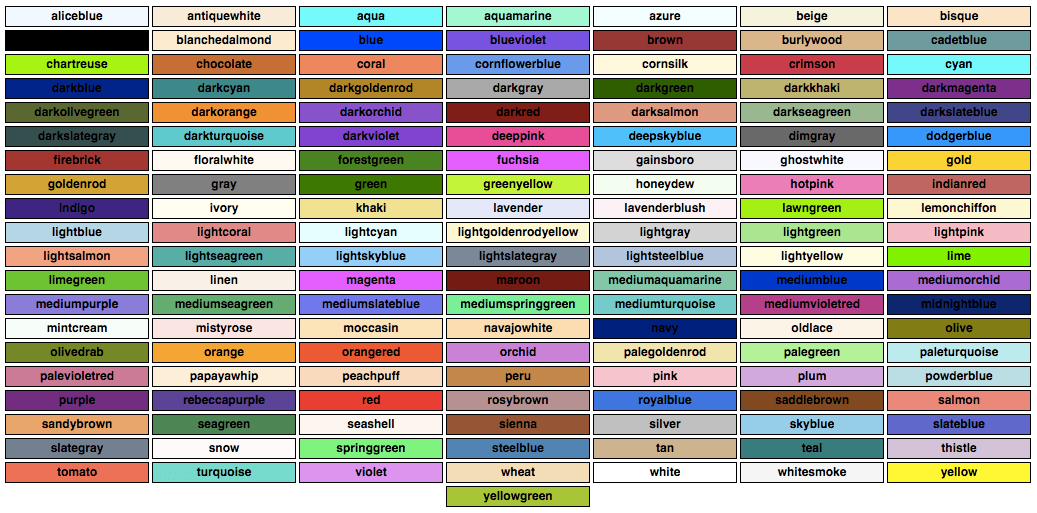
In CSS, the "color list" refers to a set of predefined color names and hexadecimal codes that can be used to specify the color of text, backgrounds, and other elements on a web page. These color names are keywords that are recognized by web browsers and can be used to easily specify a desired color without having to use complex hexadecimal codes. Some examples of color names include "red," "blue," "green," "yellow," and "black."
The color list for CSS is important because it provides a convenient and consistent way to specify colors on a web page. It also helps to ensure that colors are displayed consistently across different browsers and devices. Additionally, the color list can be used to create custom color palettes and themes for websites.
The color list for CSS has evolved over time, with new colors being added in newer versions of the CSS specification. The current color list includes over 140 different color names, providing web designers with a wide range of options to choose from.
color list for css
The color list for CSS is a crucial aspect of web design, providing a standardized set of color names and hexadecimal codes for specifying the colors of elements on a web page.
- Standardized: Ensures consistent color display across browsers and devices.
- Comprehensive: Includes a wide range of colors to choose from.
- Convenient: Allows easy color specification using color names instead of complex codes.
- Versatile: Can be used for text, backgrounds, and other elements.
- Modifiable: Custom color palettes and themes can be created using the color list.
- Historical: Has evolved over time, with new colors being added in newer CSS versions.
- Cross-Platform: Compatible with major web browsers and operating systems.
- Accessible: Supports color accessibility features for users with visual impairments.
- Dynamic: Can be used with CSS variables to create dynamic color schemes.
- Future-proof: Regularly updated to include new and emerging color trends.
In summary, the color list for CSS is a fundamental tool for web designers, providing a standardized, comprehensive, and convenient way to specify colors on web pages. Its versatility, modifiability, and cross-platform compatibility make it an essential aspect of modern web design.
Standardized
The standardization of the color list for CSS is crucial for ensuring consistent color display across different browsers and devices. Without standardization, colors specified on a web page could appear differently depending on the browser or device being used, leading to inconsistencies and visual artifacts. This is especially important for maintaining brand identity and ensuring that colors are accurately represented across multiple platforms.
For example, if a web designer specifies the color "red" for a heading using the hexadecimal code #FF0000 in one browser, it may appear as a slightly different shade of red in another browser due to variations in color interpretation. However, by using the standardized color name "red" from the CSS color list, the web designer can ensure that the heading will appear with the same shade of red across all major browsers and devices.
In summary, the standardization of the color list for CSS plays a vital role in ensuring consistent color display across different platforms, which is essential for maintaining visual consistency, brand identity, and accessibility.
Comprehensive
The comprehensiveness of the color list for CSS is a significant factor that contributes to its widespread adoption and utility. By providing a wide range of colors to choose from, it empowers web designers with the flexibility to create diverse and visually appealing web pages.
The inclusion of a comprehensive color list allows designers to select the most appropriate colors for their designs, ensuring that they can accurately convey the desired mood, atmosphere, or brand identity. The availability of a wide range of colors also enables designers to create custom color palettes and themes, tailored to specific design aesthetics or project requirements.
Furthermore, the comprehensive nature of the color list for CSS enhances accessibility and inclusivity in web design. By providing a diverse range of colors, designers can cater to the needs of users with different visual preferences and abilities, ensuring that web content is accessible to all.
In summary, the comprehensiveness of the color list for CSS is a key aspect that contributes to its versatility, flexibility, and accessibility in web design.
Convenient
The convenience of the color list for CSS lies in its ability to simplify color specification using predefined color names instead of complex hexadecimal codes. This feature greatly enhances the efficiency and accessibility of web design.
- Simplified Color Specification: Using color names eliminates the need to memorize or manually enter complex hexadecimal codes, reducing the risk of errors and saving time during the design process.
- Improved Readability: Color names are more intuitive and easier to understand than hexadecimal codes, making it simpler to communicate design specifications and collaborate with team members.
- Enhanced Accessibility: Color names are more accessible to individuals with color blindness or visual impairments, as they can be more easily distinguished and understood.
- Cross-Browser Compatibility: Color names are universally recognized by major web browsers, ensuring consistent color display across different platforms and devices.
In summary, the convenience of the color list for CSS stems from its simplified color specification, improved readability, enhanced accessibility, and cross-browser compatibility, making it an essential tool for efficient and effective web design.
Versatile
The versatility of the color list for CSS lies in its applicability to a wide range of elements within a web page, including text, backgrounds, borders, and even more complex design elements such as gradients and shadows.
- Text Color: Color names can be used to specify the color of text, allowing designers to easily create visually appealing and readable content.
- Background Color: The color list can be used to define the background color of elements, creating visual hierarchy and enhancing the overall aesthetics of a web page.
- Borders and Outlines: Color names can be applied to borders and outlines, adding emphasis and definition to various elements on the page.
- Gradients and Shadows: CSS color names can be utilized to create gradients and shadows, adding depth and visual interest to elements, and enhancing the overall design.
The versatility of the color list for CSS empowers designers with the flexibility to create diverse and visually engaging web pages, ensuring that the desired design vision can be effectively communicated through a rich and varied use of colors.
Modifiable
The modifiability of the color list for CSS is a crucial aspect that enhances its functionality and versatility in web design. It empowers designers with the ability to create custom color palettes and themes, tailored to specific design aesthetics or project requirements.
By utilizing the color list as a foundation, designers can create cohesive and visually appealing color schemes that align with their desired design vision. Custom color palettes can be developed to reflect brand identities, evoke specific moods or emotions, or simply enhance the overall user experience.
Moreover, the modifiability of the color list enables designers to create custom themes for their web pages. Themes can encompass a predefined set of colors, fonts, and other design elements that can be applied to an entire website or specific sections. This streamlines the design process and ensures consistency across multiple pages.
In summary, the modifiability of the color list for CSS empowers designers with the flexibility to create custom color palettes and themes, enhancing the visual appeal, brand identity, and overall user experience of their web pages.
Historical
The historical evolution of the color list for CSS is a testament to its dynamic and adaptable nature. As new technologies and design trends emerge, the color list has been continuously updated to reflect the changing needs of web designers.
- Expanding Color Gamut: With the advent of high-resolution displays and wide color gamuts, newer versions of CSS have introduced additional color names to support a broader range of colors. This expansion ensures that designers have access to the latest and most vibrant colors for their designs.
- Accessibility Considerations: In recent years, there has been a growing emphasis on accessibility in web design. The color list has been updated to include colors that are easily distinguishable for users with color blindness or low vision, ensuring that web content is accessible to all.
- Design Trends and Innovations: The color list has also evolved to reflect changing design trends and innovations. For example, the introduction of flat design and material design has led to the addition of new colors that are commonly used in these design styles.
- Cross-Browser Compatibility: As new versions of CSS are released, the color list is updated to maintain cross-browser compatibility. This ensures that colors specified using color names will be displayed consistently across different browsers and devices.
The historical evolution of the color list for CSS highlights its responsiveness to technological advancements, accessibility concerns, and evolving design aesthetics. By continuously updating the color list, CSS ensures that web designers have access to the most up-to-date and versatile set of colors for their designs.
Cross-Platform
The cross-platform compatibility of the color list for CSS is a crucial aspect that ensures consistent color display across different web browsers and operating systems. This compatibility is vital for maintaining visual fidelity and ensuring that colors are accurately represented on various devices and platforms.
- Standardization: The color list is defined as part of the CSS specification, which is a standardized language for styling web pages. This standardization ensures that web browsers and operating systems consistently interpret and render colors specified using the color list.
- Widespread Browser Support: The color list is supported by all major web browsers, including Google Chrome, Mozilla Firefox, Apple Safari, and Microsoft Edge. This widespread support ensures that colors specified using the color list will be displayed consistently across different browsers.
- Multi-Platform Compatibility: The color list is compatible with a wide range of operating systems, including Windows, macOS, Linux, Android, and iOS. This multi-platform compatibility allows web designers to create web pages that display colors accurately on different devices and platforms.
- Accessibility: The cross-platform compatibility of the color list contributes to accessibility by ensuring that colors are displayed consistently for users with different devices and operating systems. This consistency helps to ensure that web content is accessible to all users, regardless of their platform or device.
In summary, the cross-platform compatibility of the color list for CSS is essential for maintaining visual fidelity, ensuring consistent color display across different browsers and operating systems, and contributing to the accessibility of web content.
Accessible
The accessibility of the color list for CSS is of paramount importance in ensuring that web content is accessible to users with visual impairments. By providing a standardized set of color names, the color list enables web designers to specify colors in a way that is easily recognizable by assistive technologies such as screen readers.
For example, a web designer can use the color name "red" to specify the color of a button. This color name will be recognized by assistive technologies and announced to users with visual impairments as "red." This allows users with visual impairments to easily identify the button and understand its purpose.
Additionally, the color list includes a number of high-contrast color names, which are specifically designed to be easily distinguishable for users with color blindness or low vision. These color names can be used to create accessible designs that are easy to read and navigate for all users.
In summary, the accessibility features of the color list for CSS are essential for ensuring that web content is accessible to users with visual impairments. By providing a standardized set of color names and high-contrast color options, the color list empowers web designers to create inclusive and accessible designs.
Dynamic
The dynamic nature of the color list for CSS, when combined with CSS variables, empowers web designers to create dynamic color schemes that can adapt to different contexts and user preferences. CSS variables allow designers to store and manipulate colors centrally, enabling them to easily update and modify colors throughout a web page or even an entire website.
For example, a web designer can define a CSS variable named "--primary-color" and assign it the value "blue." This variable can then be used to specify the color of multiple elements on the page, such as headings, buttons, and backgrounds. If the designer later decides to change the primary color to "red," they can simply update the value of the "--primary-color" variable, and all elements that use that variable will automatically update to the new color.
Dynamic color schemes are particularly useful for creating responsive designs that can adapt to different screen sizes and devices. For example, a web designer can create a website that uses a dark color scheme for desktop views and a light color scheme for mobile views. By using CSS variables and the color list, the designer can easily switch between the two color schemes based on the screen size.
In summary, the dynamic nature of the color list for CSS, coupled with CSS variables, provides web designers with the flexibility and power to create sophisticated and adaptable color schemes that enhance the user experience and cater to diverse needs.
Future-proof
The "Future-proof: Regularly updated to include new and emerging color trends." aspect of the color list for CSS is a crucial factor that ensures its continued relevance and usefulness in web design. As technology and design trends evolve, new color trends emerge, and the color list is regularly updated to reflect these changes. This ensures that web designers have access to the latest and most up-to-date colors for their designs.
The importance of a future-proof color list cannot be overstated. Web pages and designs that use outdated or non-trendy colors can appear dated and unappealing. By incorporating new and emerging color trends, web designers can create designs that are visually appealing and relevant to the current design landscape.
For example, the recent trend towards dark mode interfaces has led to the inclusion of new dark-themed color names in the CSS color list. This allows web designers to easily create dark mode versions of their websites and applications without having to manually specify complex color values.
In summary, the "Future-proof: Regularly updated to include new and emerging color trends." aspect of the color list for CSS is essential for ensuring that web designers have access to the latest and most relevant colors for their designs. This helps to create visually appealing and up-to-date web pages and applications.
FAQs on "color list for CSS"
This section addresses frequently asked questions regarding the color list for CSS, providing clear and informative answers to common concerns or misconceptions.
Question 1: What is the purpose of the color list for CSS?
Answer: The color list for CSS is a standardized set of color names and hexadecimal codes that allows web designers to specify colors for text, backgrounds, and other elements on a web page. It provides a convenient and consistent way to define colors, ensuring that they are displayed accurately across different browsers and devices.
Question 2: How many colors are included in the CSS color list?
Answer: The CSS color list currently includes over 140 different color names, providing web designers with a wide range of options to choose from.
Question 3: Are new colors added to the CSS color list over time?
Answer: Yes, the CSS color list is regularly updated to include new and emerging color trends. This ensures that web designers have access to the latest and most up-to-date colors for their designs.
Question 4: Can I use the CSS color list to create custom color palettes?
Answer: Yes, the CSS color list can be used as a foundation for creating custom color palettes. Web designers can combine and modify the colors in the list to create unique and cohesive color schemes for their designs.
Question 5: Is the CSS color list compatible with all web browsers?
Answer: Yes, the CSS color list is supported by all major web browsers, including Google Chrome, Mozilla Firefox, Apple Safari, and Microsoft Edge. This ensures that colors specified using the color list will be displayed consistently across different browsers.
Question 6: How can I learn more about using the CSS color list?
Answer: There are numerous resources available online that provide comprehensive documentation and tutorials on the CSS color list. Web designers can refer to these resources to enhance their understanding and effectively utilize the color list in their designs.
In summary, the color list for CSS is a valuable tool that empowers web designers to specify and manage colors effectively. Its comprehensiveness, cross-browser compatibility, and dynamic nature make it an essential aspect of modern web design.
Proceed to the next section of this article for further insights into the color list for CSS and its applications.
Tips for Utilizing the "color list for CSS"
The color list for CSS is a powerful tool that can greatly enhance the visual appeal and usability of your web pages. Here are some tips to help you effectively utilize the color list in your designs:
Tip 1: Understand the Basics of the Color List
Familiarize yourself with the syntax and structure of the color list. Learn how to specify colors using color names, hexadecimal codes, and RGB values. This foundational knowledge will enable you to confidently navigate the color list and make informed color choices.
Tip 2: Explore the Comprehensive Color Range
The color list offers a wide spectrum of colors to choose from. Take the time to explore the available options and experiment with different colors to find the ones that best suit your design aesthetic and project requirements.
Tip 3: Utilize Color Palettes
Create custom color palettes by combining and modifying colors from the list. This allows you to develop cohesive and visually appealing color schemes that align with your brand identity and design vision.
Tip 4: Consider Accessibility
Ensure that your color choices are accessible to users with different visual abilities. Utilize high-contrast color combinations and avoid using colors that may be difficult for color-blind individuals to distinguish.
Tip 5: Keep Up with Color Trends
Stay informed about the latest color trends and incorporate them into your designs when appropriate. The color list is regularly updated with new and emerging colors, enabling you to keep your designs fresh and relevant.
Tip 6: Experiment and Refine
Don't be afraid to experiment with different color combinations and see what works best for your project. Use color swatches and prototypes to test and refine your color choices before implementing them on your live website.
Tip 7: Seek Inspiration
Draw inspiration from existing designs and color palettes to spark your creativity. Analyze how other designers have used the color list to achieve effective and visually appealing results.
Tip 8: Leverage CSS Variables
Utilize CSS variables in conjunction with the color list to create dynamic color schemes that can be easily modified and updated. This allows you to make global color changes throughout your website with minimal effort.
By following these tips, you can harness the full potential of the color list for CSS and create visually stunning and accessible web designs that engage and delight your users.
Proceed to the next section of this article for further insights into the color list for CSS and its applications.
Conclusion
The color list for CSS is a fundamental aspect of web design, providing a standardized and comprehensive set of colors that can be used to enhance the visual appeal and usability of web pages. Its versatility, cross-browser compatibility, and dynamic nature make it an indispensable tool for creating visually stunning and accessible designs.
By embracing the color list and incorporating the tips and best practices outlined in this article, web designers can unlock its full potential to create websites that are both visually engaging and accessible to all users. As the web continues to evolve, the color list will undoubtedly remain a cornerstone of web design, empowering designers to bring their creative visions to life.
CSS Reference Guide

CSS Web Site Color Chart with Code and Color Best Design of Blogs Site

Css Colors Coloring


